

Need IT help?: New IT Help Center at New Mexico Department of Public Safety will improve efficiencies, provide stronger customer service to employees, partners
When Matt Zwager arrived at the New Mexico Department of Public Safety in August 2023 as the IT Service Management Bureau Chief, he quickly recognized a growing problem.
The agency’s Help Desk – responsible for supporting roughly 1,300 employees (700 of which are New Mexico State Police) and public safety partners across New Mexico – was struggling under the weight of hundreds of unresolved tickets, staffing shortages and an outdated process that relied heavily on e-mail and voice messages.
“We realized we had a problem with resolving tickets in a timely manner with staffing issues,” Zwager said.
Under the current system, most employees request IT assistance by calling or sending e-mails to the Help Desk. But those voice messages or emails often arrive with little information attached.
“People will e-mail tickets that just say, ‘Help, my computer has a problem,’” Zwager explained. “We don’t know what system they’re having trouble with, what software they need help with or even when we can contact them. Sometimes it can take days just to gather the basic information we need to begin working on the issue. We thought what can we do with technology to make this more efficient?”
 Equipment in the server room at the headquarters in Santa Fe.
With only a small Tier 1 Help Desk staff (up to three people) handling a backlog that currently sits at around 800 tickets, delays can quickly compound.
For Zwager, the challenge was familiar territory.
“This kind of work motivates me – to identify a problem and implement new systems,” he said.
Now, after months of development and testing, Information Technology Division staff are preparing to launch a revamped new IT Help Center (landing page with a form – like a portal) designed to dramatically improve response times, automate approvals and create a more efficient experience for employees and external law enforcement agencies alike.
Instead of relying on freeform e-mails, employees will submit requests through guided forms on the IT Help Center landing page that will collect detailed information upfront. The system can then automatically categorize and route tickets directly to the appropriate support team such as applications support.
“In many cases, the system will know immediately where the ticket needs to go,” Zwager said. “Instead of waiting for someone to manually review it, troubleshoot it and forward it, the request can reach the right team in minutes.”
The improvements could significantly reduce wait times for users.
“What may have taken days before, could now take minutes or hours,” Zwager said. “The form will ask them basic questions that will get us started, and in some cases allow us to resolve their problem right away without even having to speak to them. The main driver for this was efficiency. We know we are not providing the best service right now – but we want to. This is a smart solution using resources that we already have. We had the brains here to do this – so we did it.”
The project, still in the testing phases, led by Zwager and built largely in-house by IT staff – primarily Network and Servers Bureau Chief John Tiernan, represents a major modernization effort for the department’s service management operations.
 Network and Servers Bureau Chief John Tiernan.
The IT Help Center also introduces automated approval workflows that eliminate several manual steps currently required for certain access requests.
Clovice Yinkfu, an IT project manager helping oversee implementation, described how the process currently works for requests requiring authorization from another division.
“Right now, someone sends an email to the Help Desk, the Help Desk forwards it for approval, then waits for an email response before continuing,” Yinkfu said. “With the new system, the approval request is automatically routed to the correct approver immediately.”
 From left to right: Prashantsinh Vadher, associate IT application developer and Clovice Yinkfu, an IT project manager.
Approvers receive automated notifications and can review and approve requests directly within the system, speeding up turnaround times and improving transparency for users waiting on access. Often, this might be law enforcement trying to request access to a system from the Law Enforcement Records Bureau to obtain information needed for a case they are working on.
The system will also provide the department with better operational data.
Currently, ticket metrics are limited and difficult to analyze. The new platform allows users to self-categorize issues, giving IT staff clearer insight into recurring problems, regional trends and system-wide issues.
“The system will soon be able to identify patterns,” said Zwager. “If we suddenly get 10-20 tickets related to one application or a specific district, the system will immediately notify IT leadership, and we can investigate what’s going on. We can also use this data to highlight areas in need of long-term attention.”
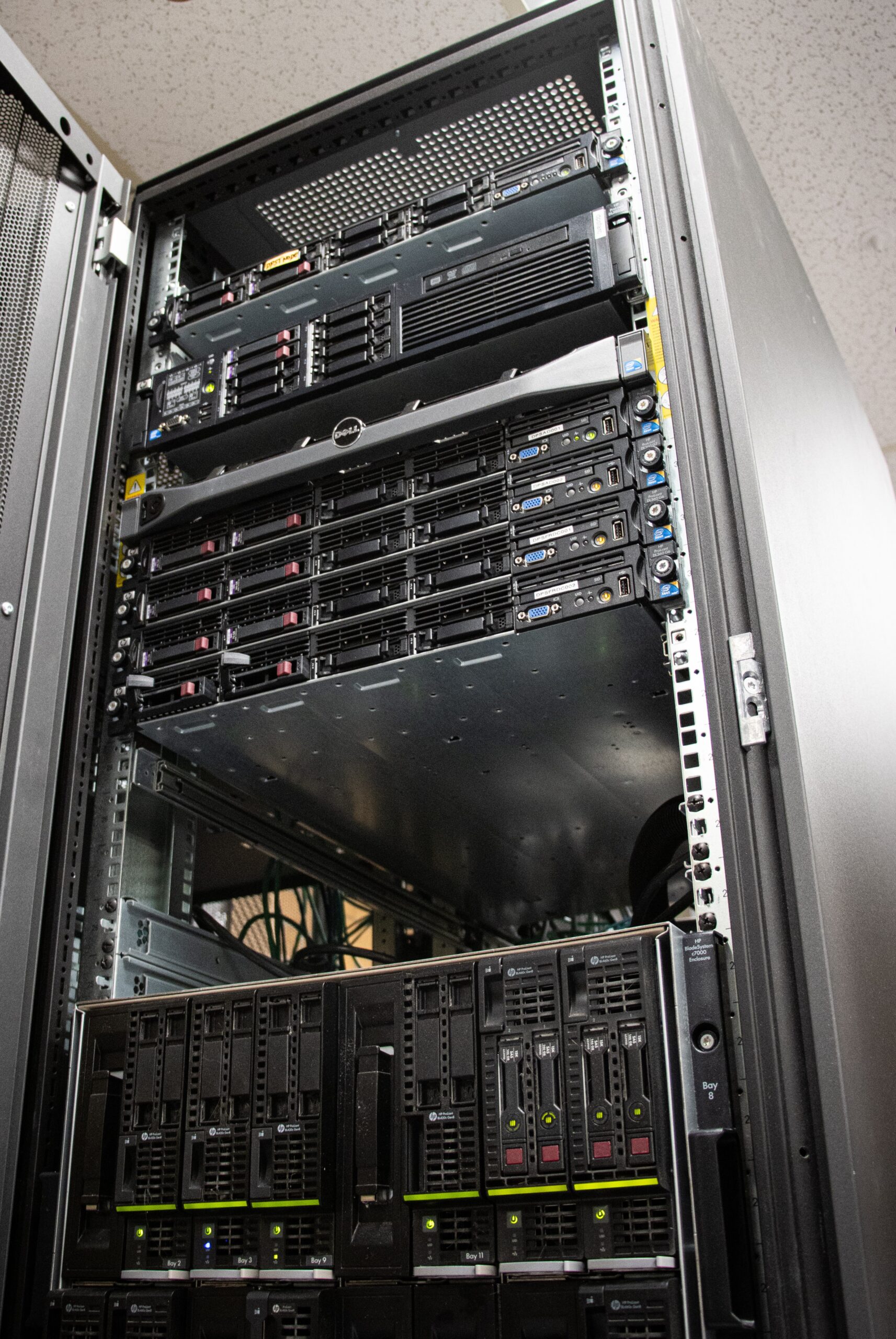 Equipment in the server room at the headquarters in Santa Fe.
Beyond faster ticket handling, the new IT Help Center also includes a growing knowledge base where users can search for answers to common technical issues themselves. Articles and instructional materials are written in user-friendly language and designed to help employees resolve simple problems without needing direct assistance from IT staff. And each customer can check the status of their requests in the portal. Finally, there’s also a plan to include on the landing page a widget displaying ticket statistics like the volume of tickets in the queue, number of tickets opened for the day, tickets closed, etc.
The system also includes an AI-powered chatbot capable of helping users navigate forms, locate information and answer common questions.
“We’re hoping it can deflect some tickets entirely,” Zwager said. “Someone may be able to solve their issue just by using the chatbot or searching the knowledge base.”
The current rollout represents what Zwager calls a “minimum viable product,” but the long-term vision is far broader.
Future phases could incorporate comprehensive asset management, allowing the department to track laptops, monitors, software access and other IT resources within a single unified system. Eventually, the platform could evolve into an enterprise-wide service management hub used beyond IT.
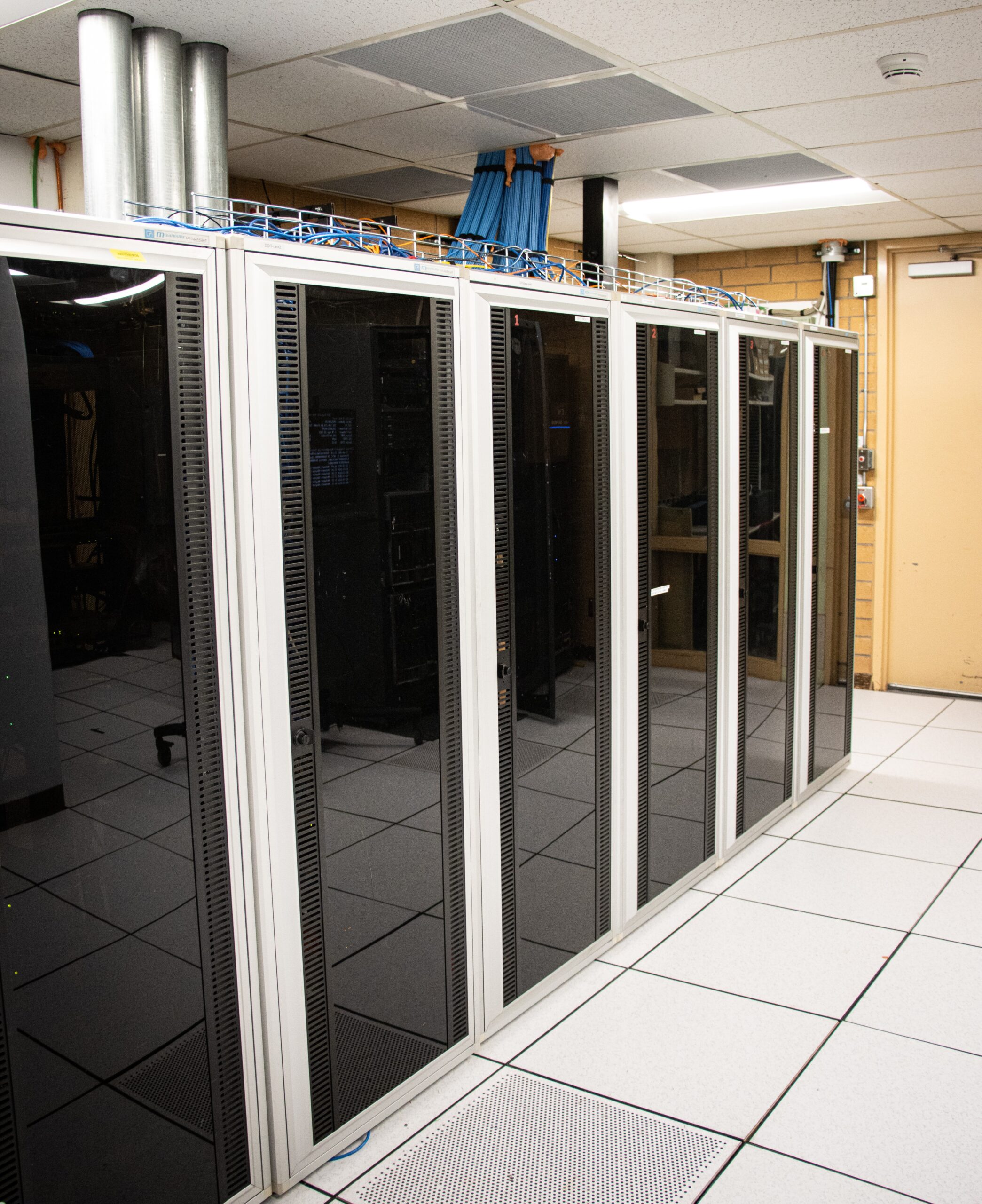 Equipment in the server room at the headquarters in Santa Fe.
“HR could use it. Fleet management could use it,” Zwager said. “It could become a central hub for services across the department.”
The project itself has also been a collaborative effort.
While Zwager developed the original vision for the system, Tiernan handled much of the technical development during the early phases of the build while simultaneously managing support operations.
“Technical credit goes to John,” Zwager said.
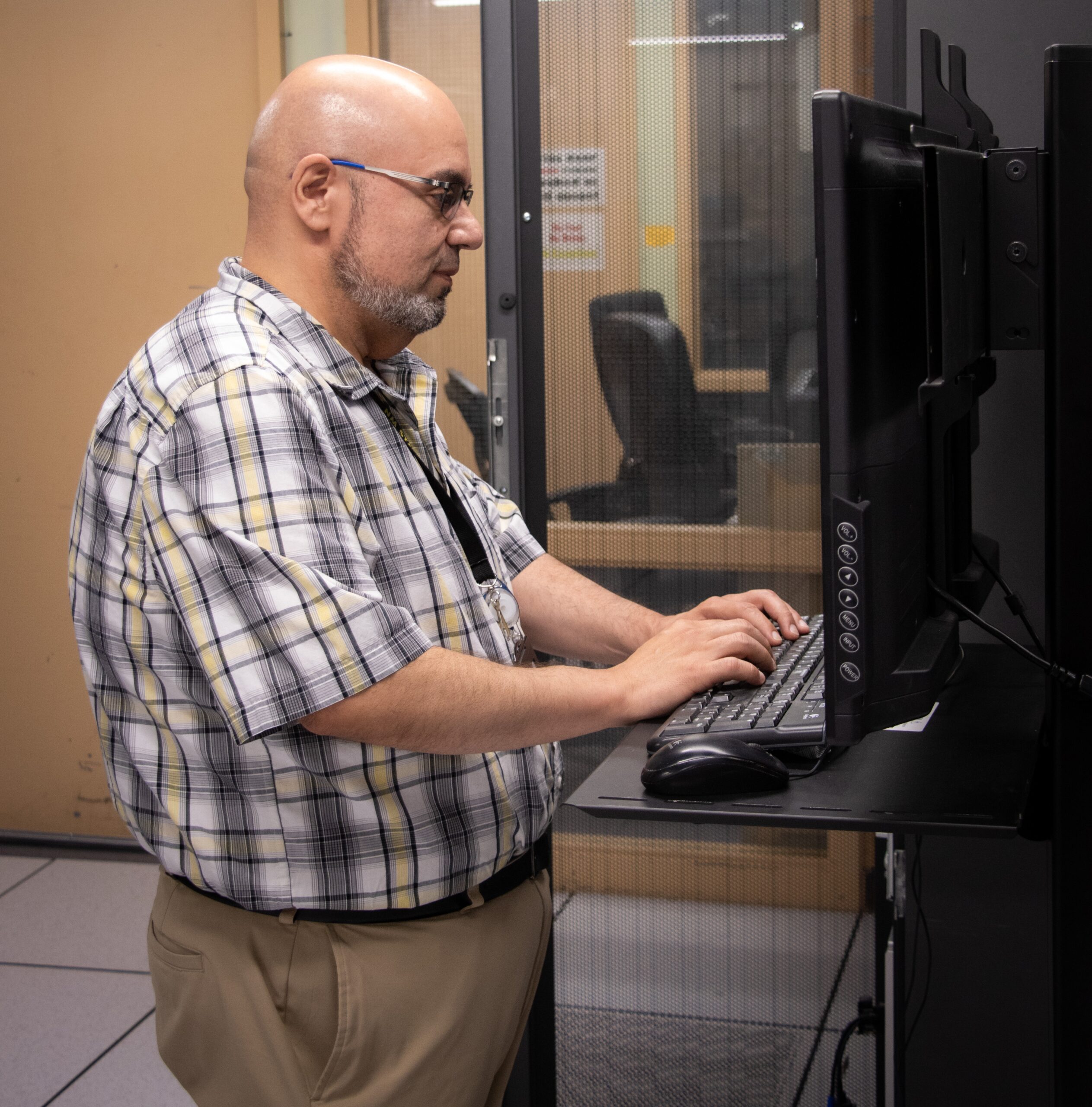 Network and Servers Bureau Chief John Tiernan.
More recently, the department brought on Prashantsinh Vadher, associate IT application developer, to continue refining the system, address testing feedback and prepare the new IT Help Center for launch (date to be determined).
For the IT staff involved, the ultimate goal is simple: improve service for the people who rely on this technology every day.
“That’s why we come to work in the morning,” Zwager said. “We want to help people solve their IT problems. This portal is going to help us do that better.”
Story by New Mexico Department of Public Safety Public Information Officer John Heil. Photos by DPS Media Relations Unit – Curtis Althaus.
Legal Disclaimer:
EIN Presswire provides this news content "as is" without warranty of any kind. We do not accept any responsibility or liability for the accuracy, content, images, videos, licenses, completeness, legality, or reliability of the information contained in this article. If you have any complaints or copyright issues related to this article, kindly contact the author above.
